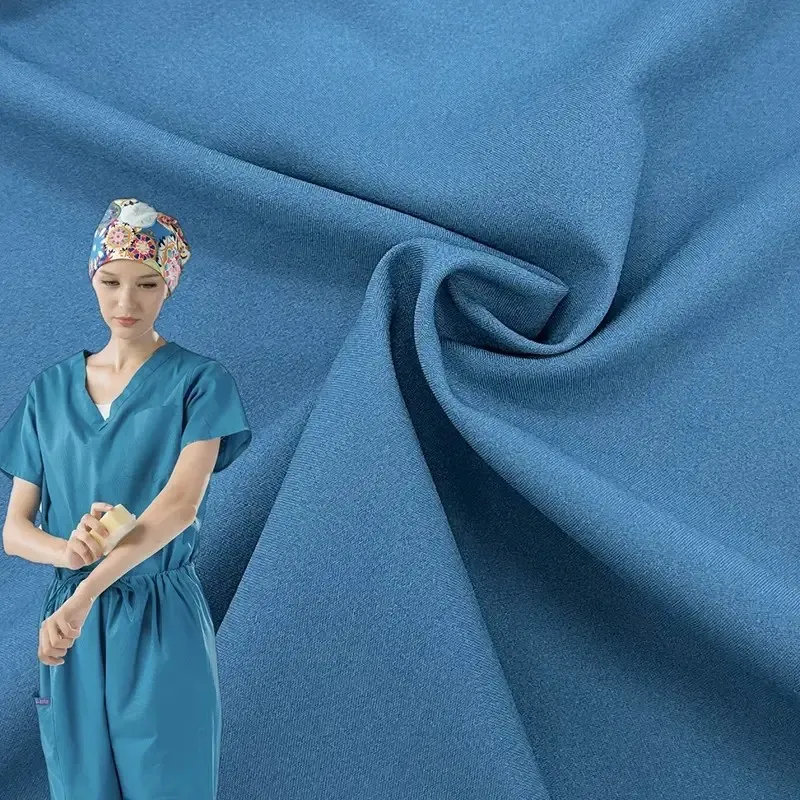
Applications
Circular knitting machines for medical wear
Machines for bandaging, cuff trims, medical bandages and protective uniform cuffs, where dimensional stability and a clean edge matter more than speed.
Recommended machine types
What to put on the floor
These are the machine types we normally quote for medical wear. Tell us the fabric weight and expected output and we narrow it to one configuration.
- Single Jersey
- Single Reverse Plated Loop
- Single Three-Thread Fleece
- Interlock
- Rib
- Single Jersey Computerized Jacquard
- Double Jersey Jacquard (36/72 Pattern)
Machine names follow our catalogue naming. Not every model is stocked for every market — availability is confirmed with the quotation.
SPECIFICATION
Medical knitwear is specified from the cleaning cycle backwards
A reusable medical garment is not judged at the factory gate; it is judged after fifty industrial wash cycles. Barrier performance, shrinkage and colour are all defined by what the laundry does to the fabric, so the machine configuration follows the wash protocol rather than the other way round.
| Product | Typical GSM | Gauge | Diameter | Feeds | Yarn |
|---|---|---|---|---|---|
| Reusable barrier gown | 150–250 | E28–E32 | 30″–34″ | 72–96 | fine polyester, tight density |
| Scrub top and trousers | 160–200 | E24–E28 | 30″–34″ | 72–96 | poly-cotton, spun or filament |
| Patient gown, light | 120–160 | E24–E28 | 30″–34″ | 72–96 | cotton or blend |
| Compression and support | 180–260 | E28–E36 | 30″ | 72–96 | plated elastane 10–20% |
| Liner and cover fabric | 80–140 | E32–E36 | 30″ | 84–96 | fine filament polyester |
Fine gauge does two things at once for medical fabric: it raises stitch density, which supports the hydrostatic performance of a barrier fabric, and it reduces the surface texture that traps lint. E32 and finer is common for gown fabric, while E24–E28 is enough for scrubs.
SPECIFICATION
Contamination risks that start at the knitting head
- Needle oil carry-over. Standard knitting oil is a contamination source on a fabric that will contact skin and wounds. Specify the oil grade and the wash-off behaviour, and record which lubricant was used on your machine.
- Lint from an open knitting hall. Fibre fly settles into the fabric and later sheds in the cleanroom. Enclosed needle beds, regular cleaning intervals and a filtered air path matter more than the machine brand.
- Barrier loss at the seam. A fabric that passes the hydrostatic test can still fail as a garment if the seam is sewn rather than sealed. Agree the seam construction with the garment maker before the fabric is approved.
- Shrinkage under industrial laundering. Reusable gowns are washed at temperatures and mechanical action far beyond domestic cycles. Specify the industrial wash procedure, not a household one.
QUALITY
Documentation and test evidence a medical buyer will ask for
Medical supply chains are audited on documents as much as on fabric. The knitting mill is usually a supplier to a device manufacturer, so the evidence package has to survive a traceability audit.
- Hydrostatic resistance for barrier fabric — ISO 811, reported with the exact test conditions and the number of wash cycles applied before testing.
- Biocompatibility context — ISO 10993 series, where the fabric is a patient-contacting material; the garment maker holds the assessment, but the mill supplies material data.
- Dimensional change after industrial washing — EN ISO 15797 procedures or the laundry protocol your customer uses, measured to ISO 5077.
- Tensile strength — ISO 13934-1, relevant for gowns that are pulled during removal.
- Colour fastness to washing and to chlorine — ISO 105-C06 plus the bleach procedure your laundry applies, because chlorine fastness is a common failure in white medical textile.
- Quality management evidence — ISO 13485 applies to the device or garment level; expect the mill to document lot traceability from yarn to roll regardless.
A vertical line or a pinhole in barrier fabric is a functional defect, not a cosmetic one. The fabric defect guide covers the mechanical causes, and the supplier audit checklist covers the documentation side.
FAQ
Questions buyers ask about medical wear
Which circular knitting machine is used for medical wear?
The usual starting points are Single Jersey, Single Reverse Plated Loop, Single Three-Thread Fleece. The final choice depends on fabric weight, required stretch and the gauge you sell, so we confirm the configuration against a fabric sample rather than a catalogue page.
What do you need from us to quote a machine for medical wear?
Fabric type and weight, required gauge and cylinder diameter, expected output per shift, and the destination port. With those we return a configuration sheet with price and lead time.
What is the lead time and warranty?
Machines are built in 20–45 working days depending on model and configuration, then 20–45 days by sea freight. Machines carry a 12-month warranty from delivery; needles and spare parts follow the period stated on the invoice.
What gauge is used for reusable medical gown fabric?
E28 to E32 is the usual range for barrier gown fabric, with E32 and finer chosen when higher hydrostatic resistance is required. Scrubs and patient gowns are commonly knitted at E24–E28 because the fabric only needs to be comfortable and durable.
Does knitting oil affect medical fabric compliance?
It can. Residual lubricant is a contamination risk on patient-contacting fabric and can interfere with finishing. Specify a lubricant compatible with your wash-off route and record the grade used on the machine.
Which wash standard should a reusable gown be tested to?
Test to the protocol your customer’s laundry actually uses — EN ISO 15797 industrial procedures are a common reference — and report hydrostatic or strength results after the agreed number of cycles, not on new fabric.

Circular knitting machines, needles and spare parts manufactured in Quanzhou, Fujian and shipped worldwide since 1996.