Applications
Circular knitting machines for home textiles
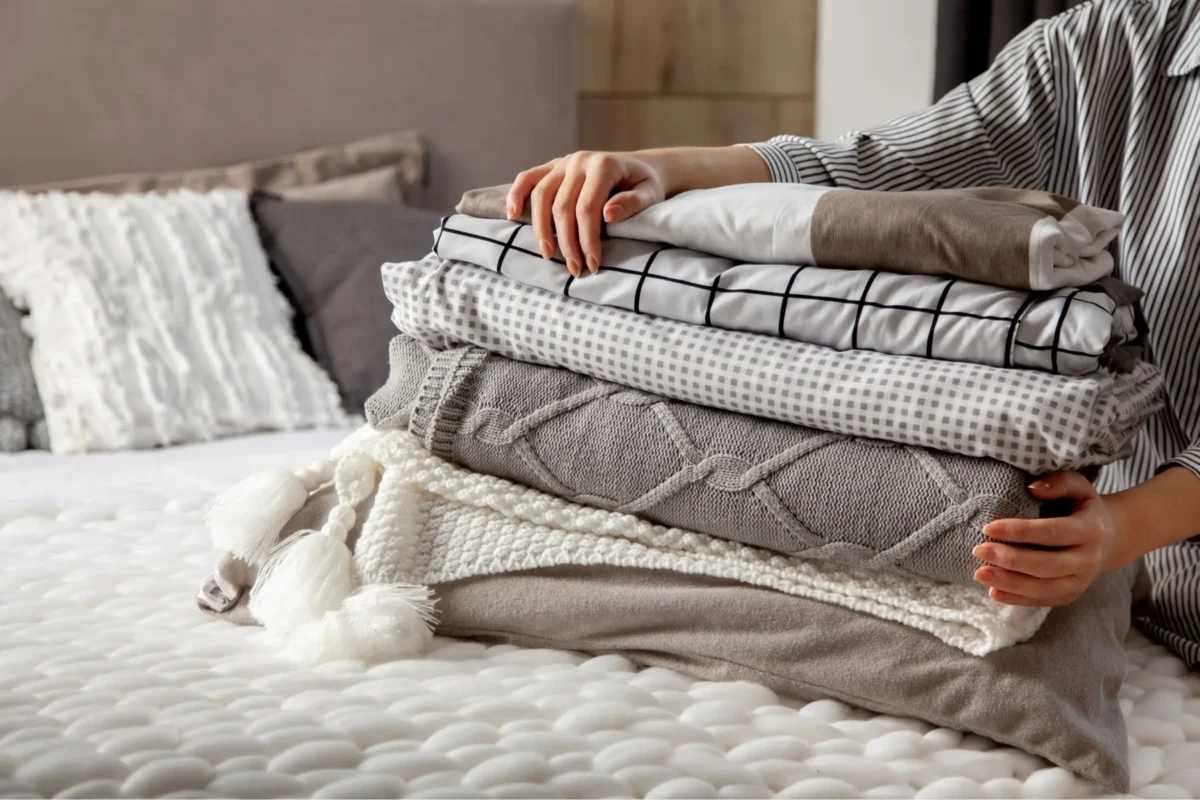
Machines for carpets, towels, blankets, floor mats, mattresses and curtains, where pile height and loop consistency decide the hand feel.
Recommended machine types
What to put on the floor
These are the machine types we normally quote for home textiles. Tell us the fabric weight and expected output and we narrow it to one configuration.
- Single Terry
- Single Reverse Plated Loop
- Single Computerized Terry Jacquard
- Double Jersey Computerized Jacquard
- Interlock
- Rib
- Double Jersey Jacquard (36/72 Pattern)
Machine names follow our catalogue naming. Not every model is stocked for every market — availability is confirmed with the quotation.
SPECIFICATION
Pile height and fabric weight set the machine
Home textiles are judged by hand feel and by how the fabric behaves after the first wash. A terry towel, a fleece throw and a mattress ticking can all be knitted on a circular machine, but they need different sinker geometry, different gauge and different take-down.
| Product | Typical GSM | Gauge | Diameter | Feeds | Yarn |
|---|---|---|---|---|---|
| Terry towel | 350–550 | E20–E24 | 30″–34″ | 48–72 | 20s–30s cotton |
| Fleece throw, blanket | 280–420 | E16–E20 | 30″–34″ | 36–54 | 20s–30s, brushed back |
| Mattress ticking | 180–260 | E24–E28 | 30″–34″ | 72–96 | 30s–40s, tight density |
| Curtain and drape jersey | 120–200 | E24–E28 | 30″–34″ | 72–96 | 30s |
| Cushion cover, jacquard | 240–360 | E18–E22 | 30″–34″ | 48–72 | 20s–30s |
Terry is the exception in this group: the loop is formed by a separate terry yarn and held by sinkers, so loop height is a machine setting rather than a finishing choice. Changing the loop height later means changing sinkers, not adjusting a parameter.
SPECIFICATION
Five mistakes that show up on home-textile roll goods
- GSM drift across a long roll. Usually yarn count variation or a take-down tension that changed with roll diameter. Record GSM at the start, middle and end of each roll.
- Loop height inconsistency in terry. Worn terry sinkers or a mismatched terry yarn tension produce a towel that feels different at the two ends.
- Shrinkage after the first domestic wash. Cotton terry commonly moves 5–8% if the fabric is not pre-shrunk; the limit has to be agreed before the machine is specified, because it affects density and yarn choice.
- Colour mismatch between blanket lots. Blanks are usually dyed after knitting, so the knitting lot structure determines whether a set of throws can be dyed together.
- Skew in jacquard cushion panels. Pattern panels show spirality more obviously than plain fabric because the design edge is a visible reference line.
QUALITY
What to test on home-textile fabric
- Dimensional change — ISO 6330 wash with ISO 5077 measurement; agree the number per product, not per factory.
- Colour fastness to washing and to light — ISO 105-C06 and ISO 105-B02, both relevant for towels and throws that are laundered and displayed.
- Pilling and surface frizz — ISO 12945-2, especially for brushed fleece backs.
- Mass per unit area — sample three positions per roll; a 3% coefficient of variation is a workable production target.
- Tensile strength where the product is seamed under load, such as mattress ticking — ISO 13934-1 strip method.
If a roll shows a vertical line, a horizontal band or isolated holes, the cause is usually mechanical rather than a finishing problem; the fabric defect guide walks through the check order.
FAQ
Questions buyers ask about home textiles
Which circular knitting machine is used for home textiles?
The usual starting points are Single Terry, Single Reverse Plated Loop, Single Computerized Terry Jacquard. The final choice depends on fabric weight, required stretch and the gauge you sell, so we confirm the configuration against a fabric sample rather than a catalogue page.
What do you need from us to quote a machine for home textiles?
Fabric type and weight, required gauge and cylinder diameter, expected output per shift, and the destination port. With those we return a configuration sheet with price and lead time.
What is the lead time and warranty?
Machines are built in 20–45 working days depending on model and configuration, then 20–45 days by sea freight. Machines carry a 12-month warranty from delivery; needles and spare parts follow the period stated on the invoice.
Can a terry machine also produce plain jersey?
It can, with the terry attachment disengaged, but the sinker geometry is optimised for loop formation. If plain jersey is more than a small share of your output, a second plain machine is usually cheaper than running terry sinkers on plain fabric.
What loop height should a towel order specify?
Loop height is normally agreed as a finished fabric property, such as pile height in millimetres or a GSM target, rather than as a machine setting. Converting that target into sinker and terry-yarn tension is the machine builder’s job.
How much shrinkage is normal for cotton terry?
Untreated cotton terry commonly moves 5–8% in the first domestic wash. If your market expects less, the density and yarn choice change, and that decision has to be made before the machine configuration is fixed.

Circular knitting machines, needles and spare parts manufactured in Quanzhou, Fujian and shipped worldwide since 1996.