Applications
Circular knitting machines for fashion apparel
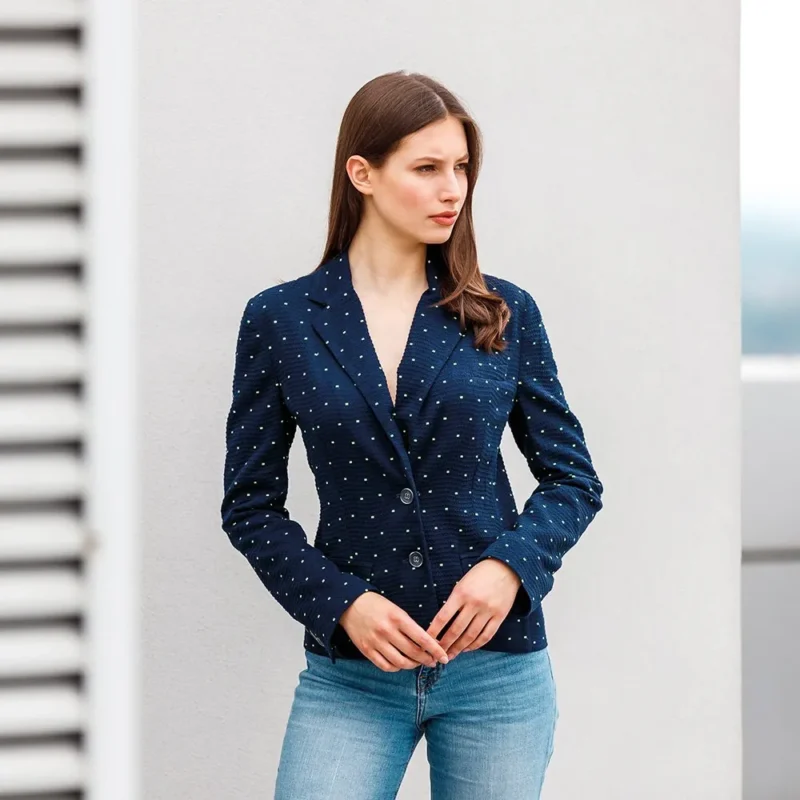
Machines for polo shirts, T-shirts, scarves, dresses, skirts, sweaters and stockings, where the pattern range matters as much as the running speed.
Recommended machine types
What to put on the floor
These are the machine types we normally quote for fashion apparel. Tell us the fabric weight and expected output and we narrow it to one configuration.
- Single Jersey
- Single Reverse Plated Loop
- Single Three-Thread Fleece
- Interlock
- Single Jersey Computerized Jacquard
- Double Jersey Computerized Jacquard
- Rib
- Double Jersey Jacquard (36/72 Pattern)
- Single Computerized 4/6-Color Auto-Striper Jacquard Knitting Machine
Machine names follow our catalogue naming. Not every model is stocked for every market — availability is confirmed with the quotation.
SPECIFICATION
Where fashion fabric weight, gauge and patterning meet
Fashion orders are short, colour-heavy and sampled before they are confirmed. The machine has to deliver the hand feel in the sample, then repeat it across a production run that may be split into several colour lots.
| Structure | Typical GSM | Gauge | Diameter | Feeds | Patterning |
|---|---|---|---|---|---|
| Single jersey, drape | 140–200 | E24–E28 | 30″–34″ | 72–96 | plain or striped |
| Single jersey, structure | 200–260 | E20–E24 | 30″–34″ | 60–84 | jacquard |
| Double jersey | 220–320 | E18–E24 | 30″–34″ | 48–72 | jacquard, 36/72 pattern |
| Rib and ottoman | 240–380 | E14–E18 | 30″–34″ | 36–54 | plain |
| Plated fashion jersey | 160–240 | E24–E28 | 30″–34″ | 72–96 | plated, 4–6 colour |
Sampling is the cost driver that buyers underestimate. A jacquard pattern needs a cylinder and pattern chain prepared before the first metre can be judged, so sample lead time is usually measured in weeks rather than days.
SPECIFICATION
The four faults that cost fashion orders money
- Spirality in single jersey. The fabric twists after washing and the garment seams no longer line up. It is a function of yarn twist, machine rotation direction and stitch density, and it has to be checked on a washed sample, not on the greige.
- Pattern repeat misalignment. A jacquard cylinder that is correctly built but incorrectly timed produces a pattern that shifts by one needle every few courses. Approve the first roll against the artwork, not just the sample swatch.
- Colour bleeding between stripe bands. Multi-colour striping with different dye-lot yarns can migrate in finishing. Request the same dye lot across all colour bands where the design allows it.
- Hand feel drift between lots. A second production run on a different machine will not match the first if the gauge, feeder count or take-down differ. Record the configuration with the approved sample.
QUALITY
Acceptance tests for a fashion knit order
- Spirality after washing — measure the displacement of a wale over a fixed length, typically within 5% for jersey garments.
- Dimensional change — ISO 6330 wash, ISO 5077 measurement, agreed per fibre blend.
- Colour fastness to washing — ISO 105-C06, typically grade 4 minimum; light fastness matters for display garments.
- GSM consistency across the roll — coefficient of variation within 3% is a practical target for a stable yarn supply.
- Surface and pilling — ISO 12945-2 where the fabric is brushed or has a raised face.
When a fault appears mid-run, the defect diagnosis guide orders the checks by defect direction so the cause is isolated before settings are changed.
FAQ
Questions buyers ask about fashion apparel
Which circular knitting machine is used for fashion apparel?
The usual starting points are Single Jersey, Single Reverse Plated Loop, Single Three-Thread Fleece. The final choice depends on fabric weight, required stretch and the gauge you sell, so we confirm the configuration against a fabric sample rather than a catalogue page.
What do you need from us to quote a machine for fashion apparel?
Fabric type and weight, required gauge and cylinder diameter, expected output per shift, and the destination port. With those we return a configuration sheet with price and lead time.
What is the lead time and warranty?
Machines are built in 20–45 working days depending on model and configuration, then 20–45 days by sea freight. Machines carry a 12-month warranty from delivery; needles and spare parts follow the period stated on the invoice.
How long does a jacquard sample take?
Plan on two to four weeks from approved artwork to a sample roll, because the cylinder and pattern chain must be built before knitting starts. Plain jersey and rib samples are typically days, not weeks.
Can the same machine produce both jacquard and plain fabric?
A jacquard machine can run plain fabric, but the reverse is not true. If a season includes patterned styles, specify the jacquard cylinder up front; converting a plain machine later costs more than the original difference.
What causes shade variation between two production runs?
Three causes dominate: a different yarn dye lot, a different machine configuration, or a different finishing route. Fixing the machine configuration and recording it with the approved sample removes the middle cause.

Circular knitting machines, needles and spare parts manufactured in Quanzhou, Fujian and shipped worldwide since 1996.