

The Complete Circular Knitting Machine Spare Parts Guide: Parts List & Maintenance (2026)
Running a circular knitting machine at peak performance isn’t just about the initial investment — it’s about understanding every component that keeps the machine running and knowing exactly when and how to maintain or replace each part. A single worn needle or misaligned cam can halt an entire production line, costing thousands in downtime.
This guide covers every major spare part category on a circular knitting machine, explains what each component does, how long it typically lasts, and the maintenance schedule that keeps your equipment running at maximum efficiency. Whether you’re a factory manager, maintenance technician, or procurement officer sourcing parts from Chinese manufacturers, this reference will help you minimize downtime and maximize output.
1. Core Spare Parts Categories
Circular knitting machines contain hundreds of individual components, but they fall into distinct functional categories. Understanding these categories helps you organize inventory, plan maintenance, and communicate effectively with parts suppliers.
1.1 Needles
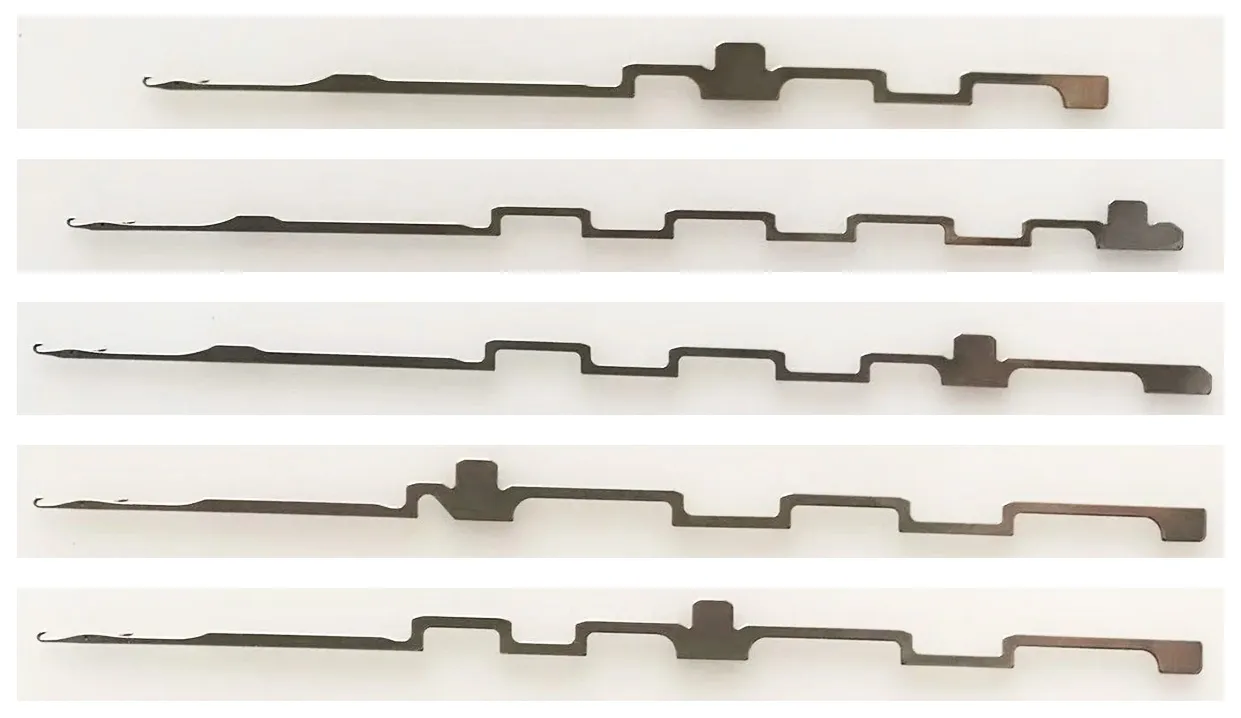
Needles are the most frequently replaced spare part on any circular knitting machine. They form the knit loops and are subject to continuous friction against sinkers, cams, and yarn.
Types:
- Compound needles — Two-piece design (hook + tongue) for high-speed machines; reduce latch fatigue
Typical Lifespan: 3–6 months of continuous operation, depending on yarn type, machine speed, and gauge.
Replacement Rule: Always replace needles in complete sets by feeder — never individually. Mixing old and new needles causes barring faults (visible horizontal lines in the fabric).
Key Specs to Order: Gauge (needles per inch), total length, latch length, and butt position. For example, a 24-gauge single jersey machine uses 24 needles per inch of cylinder circumference.
1.2 Sinkers
Sinkers work alongside needles to hold down the old loop while the new yarn is drawn through. They control fabric take-down tension and stitch length.
Types:
- Pattern sinkers — Have special noses for tuck and miss stitch formation
Typical Lifespan: 4–8 months. Sinkers wear slower than needles but are equally critical — a single damaged sinker causes a dropped stitch that can run the full width of the fabric.
Maintenance Tip: Clean sinker rings weekly to remove lint and oil residue. Buildup alters sinker timing and causes irregular stitch formation.
1.3 Cams (Stitch Cams)
Cams control the precise up-and-down movement of needles and sinkers. They are the “programming” of the machine — cam track geometry determines the stitch pattern.
Types:
- Sinker cams — Control sinker forward/backward movement
Typical Lifespan: 12–24 months. Cam wear exceeding 0.05mm on the track surface requires replacement.
Critical Check: Inspect cam surfaces monthly for scratches, pitting, or uneven wear. Worn cams cause timing discrepancies that produce fabric defects even when needles and sinkers are new.
1.4 Cylinder and Dial Assemblies
The cylinder is the main body of the machine. Needles slide vertically in grooves (tricks) cut into the cylinder wall. On double jersey machines, a dial (upper cylinder) holds additional needles for rib and purl patterns.
Key Components:
- Bevel gears — Transfer power between horizontal and vertical shafts
Typical Lifespan: 5–10+ years with proper maintenance. The cylinder itself rarely needs replacement, but the tricks (grooves) can wear, especially at high speeds.
Maintenance: Check cylinder bore and concentricity annually. Runout exceeding manufacturer tolerances causes uneven needle wear and fabric defects.
1.5 Yarn Feeding System
The yarn feeding system delivers yarn from the creel to the needles at consistent tension.
Components:
- Stop motions — Detect yarn breakage and stop the machine automatically
Typical Lifespan: Yarn guides: 6–12 months. Tensioners: 12–18 months. Stop motion sensors: 2–5 years.
Critical Tip: After replacing any feeding component, recalibrate yarn tension across all feeders. Inconsistent tension is the #1 cause of barring in circular knitted fabrics.
1.6 Take-Down and Batch System
This system pulls the knitted fabric downward and rolls it onto a batch roller for collection.
Components:
- Pressure rollers — Apply consistent pressure for even take-down
Typical Lifespan: Roller rubber surfaces: 6–12 months. Mechanical components: 3–5 years.
Maintenance: Clean roller surfaces weekly. Worn or uneven rollers cause fabric distortion and creasing in the batch.
1.7 Lubrication System
Proper lubrication is the single most important factor in extending the life of all moving parts.
Components:
- Auto-lubrication timers — Control lubrication frequency and volume
Typical Lifespan: Filters: replace every 1–3 months. Oil lines: 2–5 years. Pump: 5–10 years.
Oil Specification: Use manufacturer-recommended knitting machine oil (typically ISO VG 32–68 viscosity). Wrong oil viscosity causes either insufficient lubrication or excessive oil mist contamination of the fabric.
1.8 Bearings and Drive Components
Components:
- Ratchet pinions — Control incremental rotation
Typical Lifespan: Bearings: 8,000–12,000 operating hours. Belts: 6–18 months.
Warning Signs: Unusual vibration, noise, or temperature rise indicates bearing failure. Replace immediately — a seized bearing can destroy the cylinder.
1.9 Electronic and Sensor Components
Modern circular knitting machines are increasingly computerized.
Components:
- Inverters — Control motor speed
Typical Lifespan: Sensors: 3–7 years. PLC: 7–15 years. Inverters: 5–10 years.
Maintenance: Keep electronic components clean and dry. Lint infiltration is the leading cause of sensor malfunction.
2. Complete Spare Parts Quick-Reference Table
| Part Category | Key Components | Typical Lifespan | Replacement Priority |
|---|---|---|---|
| Needles | Latch, spring-beard, compound | 3–6 months | 🔴 Critical |
| Sinkers | Knitting, transfer, pattern | 4–8 months | 🔴 Critical |
| Cams | Knit, tuck, miss, clearing | 12–24 months | 🔴 Critical |
| Yarn guides | Ceramic eyes, carriers | 6–12 months | 🟡 High |
| Tensioners | Spring, pneumatic, electronic | 12–18 months | 🟡 High |
| Bearings | Main, camshaft, roller | 8,000–12,000 hrs | 🟡 High |
| Belts | Drive belts, timing belts | 6–18 months | 🟡 High |
| Take-down rollers | Rubber rollers, spreaders | 6–12 months | 🟡 High |
| Oil filters | Inline, return-line | 1–3 months | 🟡 High |
| Stop motions | Mechanical, electronic | 2–5 years | 🟢 Standard |
| Sensors | Needle, fabric, position | 3–7 years | 🟢 Standard |
| Cylinder/dial | Body, gears, tricks | 5–10+ years | 🟢 Standard |
3. Maintenance Schedule
Following a systematic maintenance schedule reduces equipment failure rates by 60–75% and extends machine lifespan significantly.
Daily Maintenance (15–30 minutes)
- Check take-down roller pressure and fabric quality
Weekly Maintenance (45–90 minutes)
- Check fabric take-down alignment
Monthly Maintenance (2–4 hours)
- Check all bolts and fasteners for tightness
Quarterly Maintenance (4–8 hours)
- Full machine alignment check
Annual Maintenance (2–3 days)
- Complete machine recalibration
4. Common Spare Parts Problems and Solutions
Problem: Barring (Horizontal Lines in Fabric)
Cause: Mixed old and new needles, or worn sinker ring.
Solution: Replace all needles in the affected feeder set simultaneously. Check sinker ring for wear.
Problem: Dropped Stitches
Cause: Damaged sinker, bent needle, or incorrect cam timing.
Solution: Inspect sinkers and needles at the fault location. Check cam alignment and timing.
Problem: Yarn Breaks at Feeder
Cause: Worn yarn guide, incorrect tension, or rough ceramic eye.
Solution: Replace yarn guides. Recalibrate tension. Check for burrs on ceramic eyes.
Problem: Fabric Defects (Holes, Runs)
Cause: Broken needle not detected, or faulty needle detector.
Solution: Replace broken needle. Test and recalibrate needle detector sensor.
Problem: Excessive Vibration
Cause: Worn bearings, loose fasteners, or cylinder misalignment.
Solution: Inspect and replace bearings. Tighten all fasteners. Check cylinder runout.
Problem: Oil Leaks
Cause: Worn seals, cracked oil lines, or loose fittings.
Solution: Replace seals and damaged lines. Tighten fittings. Check oil pressure.
5. How to Order the Right Spare Parts
Ordering spare parts for circular knitting machines requires precise specifications. Here’s what to communicate to your supplier:
- Machine make and model — e.g., Mayer & Cie OV3.2, Terrot UCC, Pailung SN-3F
- Machine gauge — needles per inch (e.g., 24G, 28G, 32G)
- Cylinder diameter — in inches (e.g., 30″, 34″, 26″)
- Number of feeders — affects quantity needed for needles, sinkers, and yarn guides
- Part specifications — material, dimensions, hardness (especially for needles and cams)
- Quantity — always order 5–10% extra for needles and sinkers (they’re the most frequently replaced)
Pro Tip: For needles and sinkers, order by the complete set (total needles = gauge × cylinder diameter × π). A 30″ diameter, 24-gauge machine needs approximately 2,260 needles per cylinder.
6. Frequently Asked Questions
Q: How often should I replace circular knitting machine needles?
A: Needles typically last 3–6 months under continuous operation. However, inspect them weekly and replace any visibly worn or damaged needles immediately. Always replace in complete sets by feeder to avoid barring faults.
Q: What are the most critical spare parts to keep in stock?
A: The three most critical categories are needles, sinkers, and cams. These wear fastest and cause immediate fabric defects when damaged. Maintain at least one full set of needles and sinkers in inventory at all times.
Q: Can I use generic spare parts instead of OEM parts?
A: Generic parts from reputable Chinese manufacturers can offer 30–50% cost savings with comparable quality. However, for critical components like cams and cylinder gears, OEM parts ensure precise tolerances. For needles and sinkers, high-quality generic parts from established suppliers are generally reliable.
Q: How do I know when cams need replacement?
A: Inspect cam surfaces monthly for visible wear, scratches, or pitting. If track wear exceeds 0.05mm, replace the cam. Signs of cam wear include timing discrepancies, inconsistent stitch formation, and fabric defects that persist after replacing needles and sinkers.
Q: What type of oil should I use for circular knitting machines?
A: Use the oil viscosity recommended by your machine manufacturer, typically ISO VG 32–68. Using the wrong viscosity leads to insufficient lubrication (too thin) or excessive oil mist and fabric contamination (too thick).
Q: How can I extend the lifespan of my spare parts?
A: Follow the maintenance schedule rigorously, use correct yarn tension, keep the machine clean of lint, use proper lubrication, and replace worn parts promptly. Preventive maintenance extends part life by 40–60% compared to reactive replacement.
7. Conclusion
Understanding your circular knitting machine’s spare parts isn’t optional — it’s essential for profitable textile production. Every component, from the smallest needle to the main cylinder, plays a specific role in fabric quality and machine uptime.
The key takeaways: maintain a systematic replacement schedule, always replace needles and sinkers in complete sets, keep critical spares in inventory, and work with reliable parts suppliers who understand your machine specifications.
Need help sourcing spare parts for your circular knitting machine? Contact our technical team for a custom parts quote based on your machine model and production requirements.