

Definition
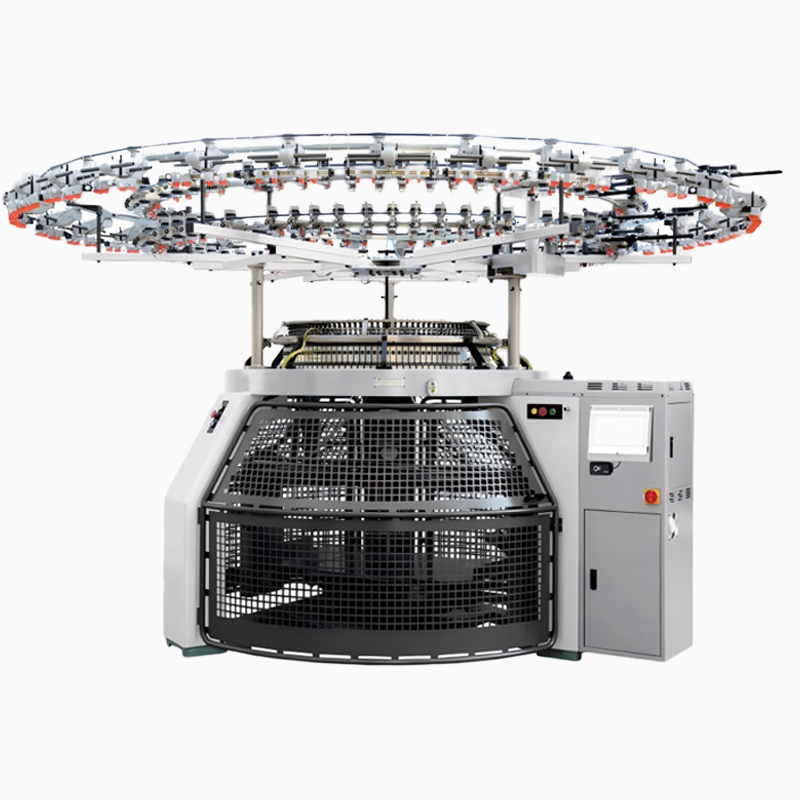
A circular knitting machine works by rotating a cylinder of needles that interlock yarn into loops, forming continuous tubular fabric.
TL;DR
A circular knitting machine uses rotating needles and yarn feeders to create fabric continuously, making textile production faster and more efficient.
How does a circular knitting machine work step by step?
Step 1: Yarn feeding
Quick Answer:
Yarn is supplied evenly into the machine.
Details:
First, the machine feeds yarn through yarn feeders.
Then, the system controls yarn tension to keep it stable.
As a result, the yarn flows smoothly into the knitting area.
This step is important for fabric quality.
Step 2: Needle movement
Quick Answer:
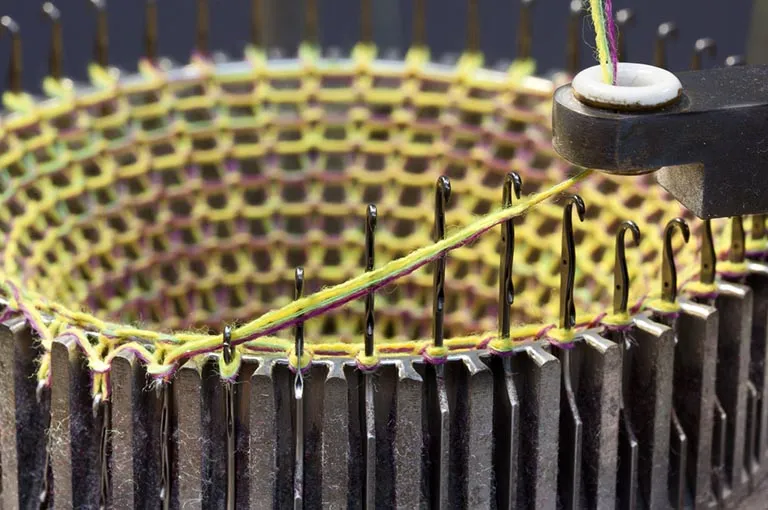
The machine moves needles up and down to catch yarn.
Details:
Next, cams guide the needles in a fixed path.
The needles move up to catch the yarn and move down to form loops.
Because of this movement, the machine creates a consistent pattern.
This step ensures stable knitting.
Step 3: Loop formation
Quick Answer:
The machine forms loops that connect into fabric.
Details:
Then, each needle pulls the yarn into a loop.
After that, new loops connect with previous ones.
As a result, the fabric structure starts to build.
This process repeats continuously.
Step 4: Fabric formation
Quick Answer:
The machine creates fabric as a continuous tube.
Details:
Next, the loops connect row by row.
The machine pulls the fabric downward during production.
Therefore, the fabric forms without seams.
This improves efficiency and reduces waste.
Step 5: Fabric take-down
Quick Answer:
The machine collects the finished fabric automatically.
Details:
Finally, the take-down system rolls the fabric.
The system keeps tension stable during this process.
As a result, the fabric remains even and smooth.
This step prepares the fabric for the next stage.
Common Mistakes
Quick Answer:
Most problems come from yarn tension, needle wear, or incorrect settings.
Details:
For example, low tension can cause loose fabric.
In addition, worn needles can create defects.
However, regular maintenance can prevent these issues.
Therefore, factories should check machines regularly.
Industry Data
Circular knitting machines run at 20–40 RPM
They improve efficiency by 30–50% compared to flat machines
They reduce fabric waste by up to 20%

FAQ
Why does fabric become uneven?
Usually, incorrect yarn tension or worn needles cause this problem.
Can the machine use different yarn types?
Yes, but operators must adjust the settings.
How often should maintenance be done?
Factories should check machines every 3–6 months.
Why do needles break?
High speed, poor quality needles, or wrong settings can cause breakage.
Is this machine suitable for beginners?
Yes, many models are easy to operate.
CTA
Need help choosing or operating a machine?
Contact us for technical support.