
-430x429.webp)
Knitting Machines Guide for Textile Manufacturers

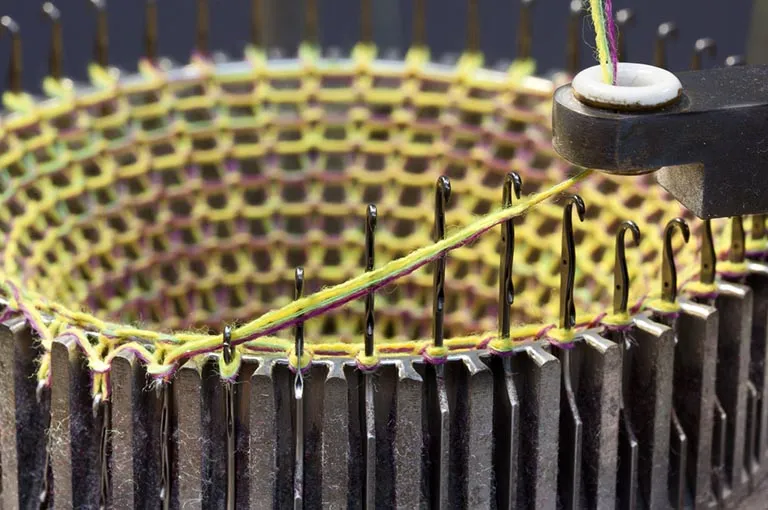
Knitting machines are essential equipment in modern textile manufacturing. By interlooping yarns with precision needles, these machines enable high-efficiency production of knitted fabrics used in apparel, home textiles, and technical textiles.
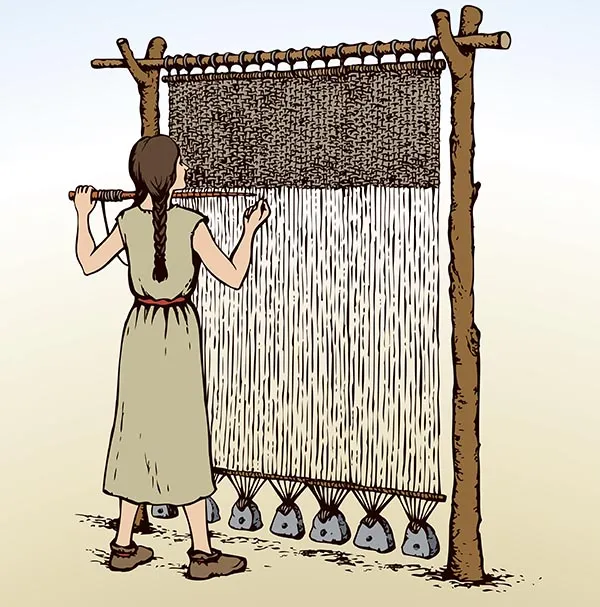
From traditional hand knitting to today’s high-speed industrial knitting machines, technological innovation has completely transformed the textile industry. Today, manufacturers can choose from a wide range of knitting machines designed for different fabric structures, production speeds, and applications.
This guide introduces the main types of knitting machines, classified into weft knitting machines and warp knitting machines, helping textile professionals, buyers, and factory owners understand their functions and applications.
How Knitting Machines Are Classified
Knitting machines can be classified in several ways:
- By machine configuration: Flat knitting machines or circular knitting machines
- By function: Fabric knitting machines or garment-length knitting machines
- By knitting method: Weft knitting machines and warp knitting machines
In industrial textile production, the most widely accepted classification is weft knitting vs. warp knitting, which we focus on below.
Weft Knitting Machines
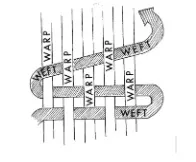
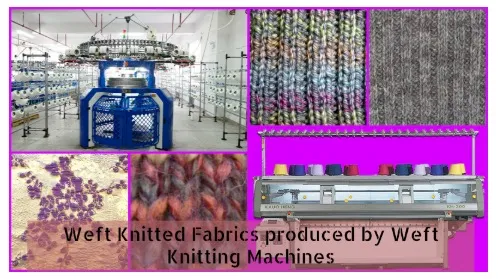
Weft knitting machines produce fabric by forming loops from a single yarn running horizontally across the fabric width. This is the most common knitting method used in apparel production.
Key Features of Weft Knitting
- Yarn is fed horizontally
- Fabric is elastic and comfortable
- Widely used in clothing and fashion textiles
Main Types of Weft Knitting Machines
Circular Knitting Machine
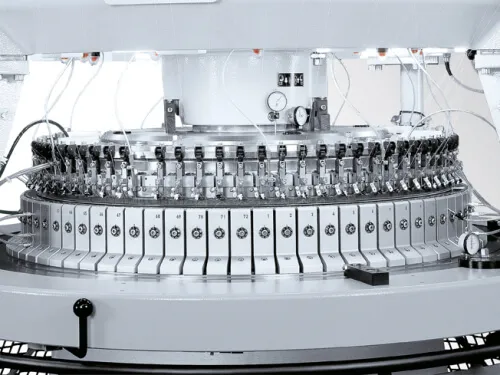
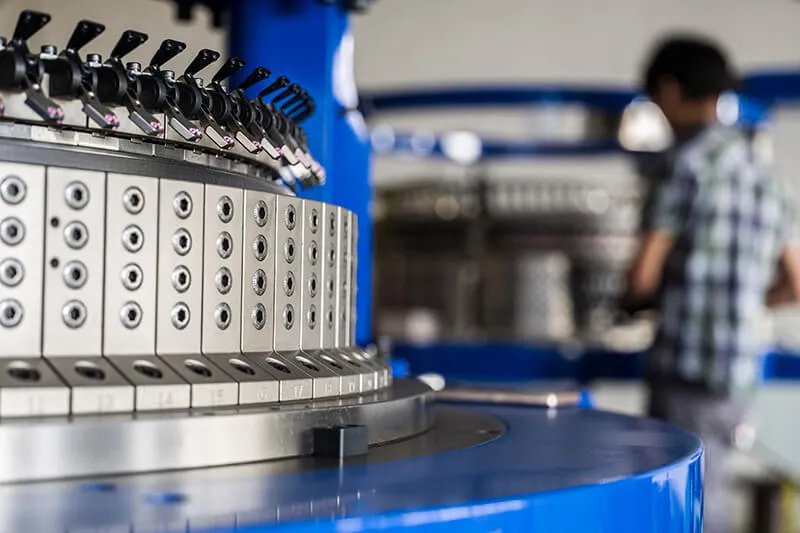
Circular knitting machines are among the most popular knitting machines in the textile industry. They knit fabric in a continuous spiral, producing seamless tubular fabrics at very high speeds.
Typical machine diameters: 12″ to 60″
Production advantage: High output, smooth fabric surface
Applications
- T-shirts and jerseys
- Sportswear and casual wear
- Dresses and underwear
- Upholstery and home textiles
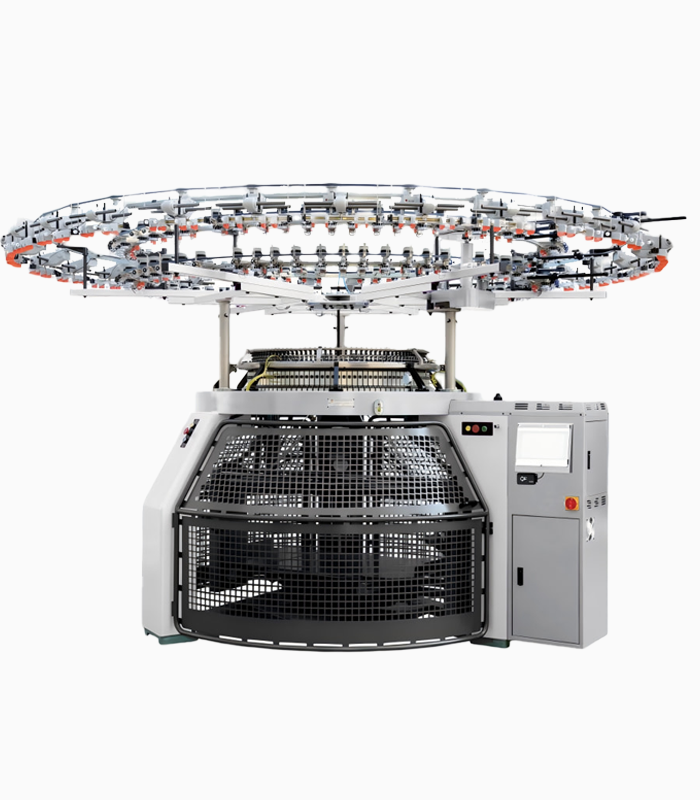
Single Jersey Circular Knitting Machine
Single jersey machines use one needle bed and are designed for lightweight, breathable fabrics.
Common fabric types
- Plain jersey
- Single lacoste
- Jersey blister
Sub-categories
- Plain Single Jersey Machine – basic one-track cam system
- 2-Track / 4-Track Single Jersey Machine – higher productivity and pattern flexibility
- Terry & Fleece Knitting Machine – towels, bathrobes, winter fabrics
- Jacquard Single Jersey Machine – complex patterned fabrics using knit, tuck, and miss stitches
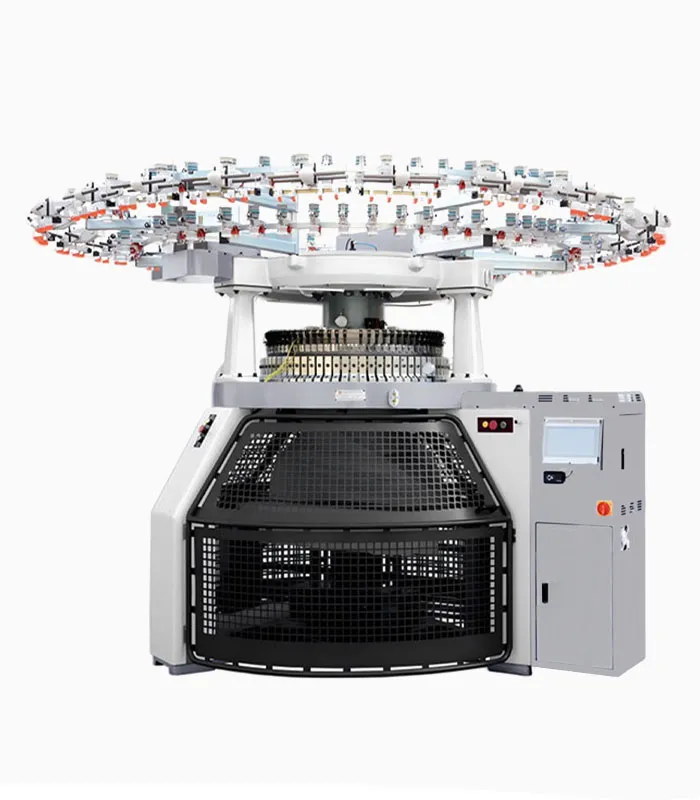
Double Jersey Circular Knitting Machine
Double jersey machines use two needle beds (cylinder and dial), allowing more complex fabric structures.
Main Types
- Rib Knitting Machine – ribbed fabrics with high elasticity
- Interlock Knitting Machine – thicker, more stable fabrics
- Pique Knitting Machine – textured waffle-style fabrics
Applications
- Polo shirts
- Sportswear
- High-end fashion fabrics
Straight Bar Knitting Machine
Straight bar knitting machines use bearded needles arranged vertically and are mainly used for garment panels.
- Single Needle Straight Bar Machine – basic flat fabrics
- Double Needle Straight Bar Machine – rib structures (lower speed)
Flat Knitting Machine (Flat Bed / V-Bed)
Flat knitting machines are ideal for 3D and shaped garments.
Key advantages
- Complex stitch patterns
- Precise garment shaping
- Suitable for small-batch or customized production
Applications
- Sweaters
- Collars and cuffs
- Arm bands
Warp Knitting Machines
Warp knitting machines form fabric by looping yarns vertically in a zigzag pattern. Multiple yarns are used simultaneously, resulting in strong, dimensionally stable fabrics.
Advantages of Warp Knitting
- High production speed
- Excellent fabric stability
- Suitable for technical and functional textiles
Raschel Warp Knitting Machine
Raschel machines use coarser yarns and are ideal for open or patterned structures.
Applications
- Lace and trimmings
- Mesh fabrics
- Bags and backpacks
- Military and industrial textiles
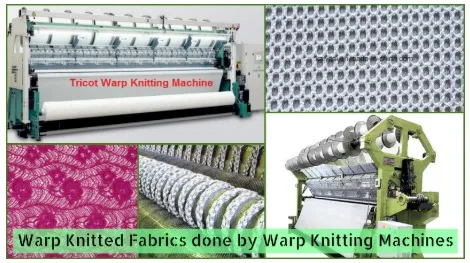
Tricot Warp Knitting Machine
Tricot machines produce finer, smoother fabrics using compound needles.
Applications
- Swimwear
- Underwear
- Sportswear
- Lingerie fabrics
Summary: Choosing the Right Knitting Machine
Selecting the right knitting machine depends on:
- Fabric structure requirements
- Production capacity
- End-use applications
- Budget and automation level
Understanding the differences between weft knitting machines and warp knitting machines helps manufacturers optimize production efficiency and fabric quality.
Our Knitting Machine Solutions
Single Knit Series
- Single Jersey
- Single Terry
- Open Width
- Three-Thread Fleece
Double Knit Series
- Rib
- Interlock
- Open Width
- Body Size Machines
Computerized Series
- Single & Double Jacquard
- 4/6 Color Auto-Striper
- Terry Jacquard & Rib Transfer
📩 Contact us today to learn more about professional knitting machine solutions for your textile production.