
-430x429.webp)
Circular Knitting Machines: The Ultimate Guide for Textile Manufacturers

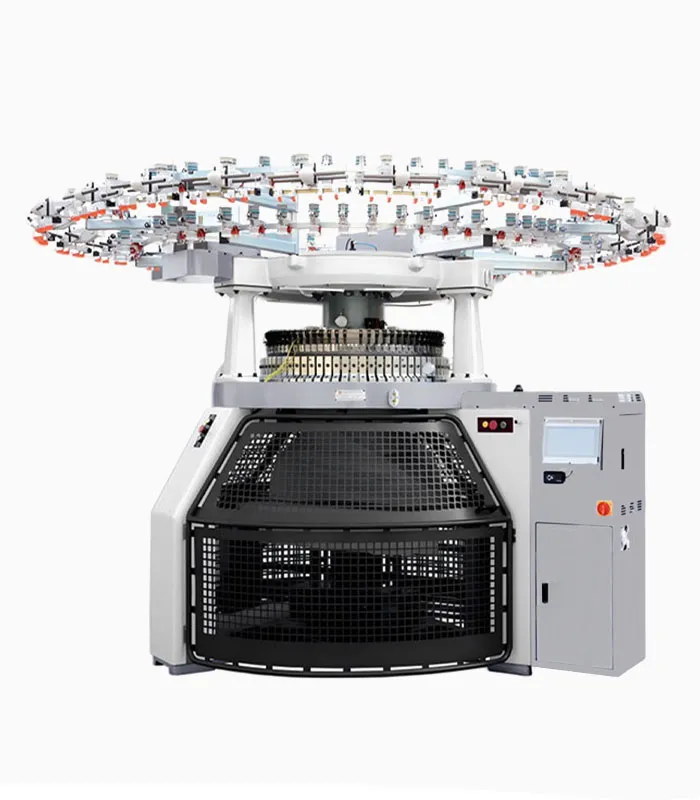
Introduction to Circular Knitting Machines
Knitted garments such as socks, sweaters, T-shirts, and sportswear are part of everyday life. However, producing these items by hand is time-consuming and inefficient. This is where circular knitting machines play a critical role.
A circular knitting machine allows manufacturers to produce seamless knitted fabrics at high speed and consistent quality. From small workshops to large-scale textile factories, these machines have become essential for modern knitwear production.
In this ultimate guide, we will explore:
- What a circular knitting machine is
- Its main components and working principle
- Different types of circular knitting machines
- Industrial applications and advantages
Whether you are a beginner or a textile professional, this guide will help you understand how circular knitting machines work and why they matter.
What Is a Circular Knitting Machine?
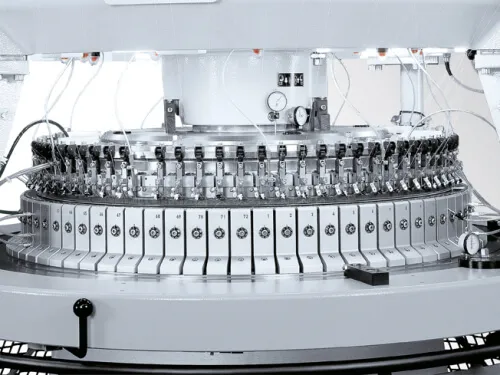
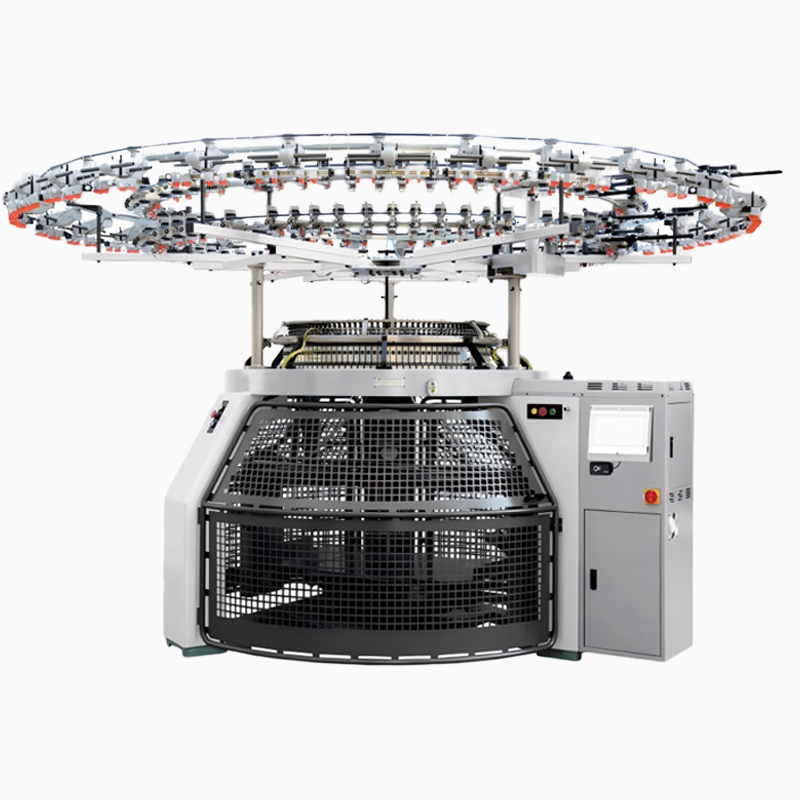
Circular knitting is a method of producing fabric in a continuous tubular form without side seams. The machine uses multiple needles arranged in a circular cylinder, allowing yarn to be knitted in a spiral motion.
This technology is widely used to manufacture:
- Socks and hosiery
- T-shirts and polo shirts
- Sportswear and activewear
- Sweaters and casual apparel
Compared with flat knitting machines, circular knitting machines offer higher productivity, better fabric uniformity, and seamless construction.
Basic Working Principle of Circular Knitting Machines
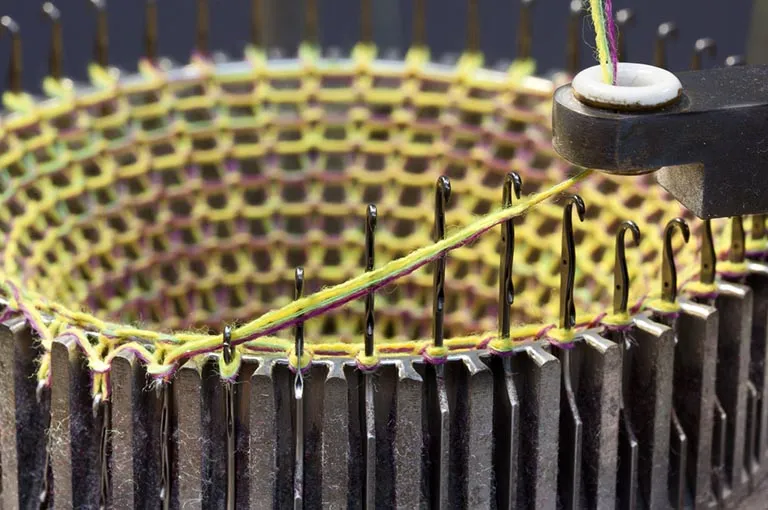
In a circular knitting machine, yarn is fed continuously to needles mounted on a rotating cylinder. As the cylinder rotates:
- Needles move up and down following cam tracks
- Yarn is captured and interlooped
- Fabric is formed in a continuous tube
Some industrial machines contain over 200 needles, enabling high-speed production and complex fabric structures. This makes circular knitting machines ideal for mass production and large order fulfillment.
Main Parts of a Circular Knitting Machine
Understanding machine components helps improve maintenance efficiency and fabric quality.
Knitting Needles
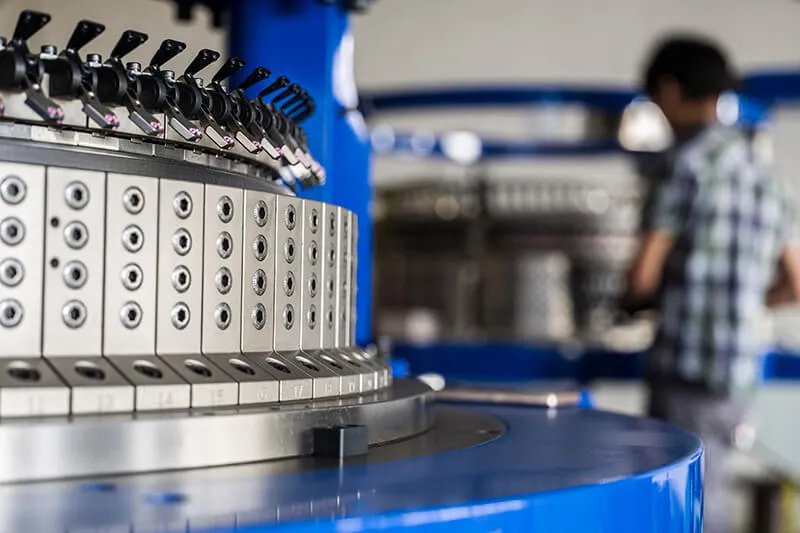
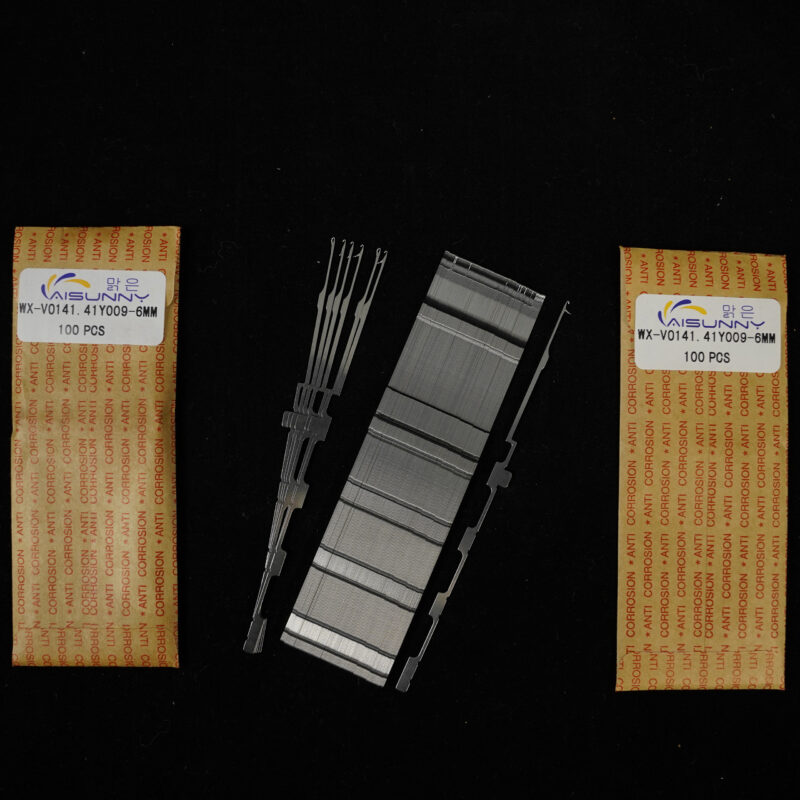
Knitting needles are the core elements of the machine. Common types include:
- Latch needles – most widely used, suitable for high-speed knitting
- Spring bearded needles – used in specific applications
- Compound needles – provide precise yarn control and stability
High-quality needles ensure smooth operation and reduce fabric defects.
Yarn Feeders (Positive Feeders)
Positive yarn feeders supply yarn at a constant speed, ensuring uniform tension and consistent fabric quality. Sensors automatically stop the machine if yarn breaks or tension becomes abnormal.
Cylinder
The cylinder holds the needle tracks and defines the machine diameter. Different cylinder sizes allow production of various fabric widths and garment types.
Sinkers
Sinkers work together with needles to form loops and hold fabric in position, preventing yarn distortion during knitting.
Cams
Cams guide needle and sinker movement. They control knitting actions such as knit, tuck, and miss stitches.
Lubrication System
Automatic oilers or spray lubricators reduce friction and extend machine lifespan without contaminating yarn.
Motor and Inverter
The motor drives machine rotation, while the inverter controls speed and stability, enabling precise RPM adjustment.
Creel
The creel holds yarn packages and ensures smooth yarn delivery without tangling.
Types of Circular Knitting Machines
Circular knitting machines can be classified based on knitting structure and fabric type.
Weft Knitting Machines
Weft knitting machines use a single yarn fed horizontally to form loops. These machines are widely used in apparel manufacturing.
Common weft knitting styles include:
- Circular knitting – seamless tubular fabric
- Flat knitting – back-and-forth fabric formation
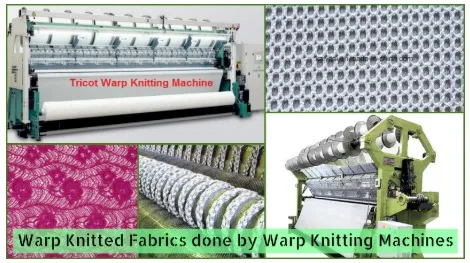
Warp Knitting Machines
Warp knitting uses multiple yarns fed vertically, producing stable and run-resistant fabrics.
Main warp knitting types:
- Tricot – fine, lightweight fabrics for underwear and sportswear
- Raschel – coarse fabrics for lace, nets, and technical textiles
- Milanese – decorative rib-like structures
Types of Circular Knitting Machines by Fabric Structure
Single Jersey Circular Knitting Machines
- Lightweight and elastic fabrics
- Used for T-shirts, underwear, and casual wear
- Includes fleece, terry, and multi-track designs
Double Jersey Circular Knitting Machines
- Two needle beds (cylinder and dial)
- Produces rib, interlock, and pique fabrics
- Suitable for thicker, more stable garments
Computerized Jacquard Circular Knitting Machines
- Advanced needle selection systems
- Capable of complex patterns and multi-color designs
- Ideal for fashion and high-end textiles
Yarn Feeding Technology and Automation
Modern circular knitting machines are equipped with:
- Electronic yarn tension control
- Automatic stop-motion sensors
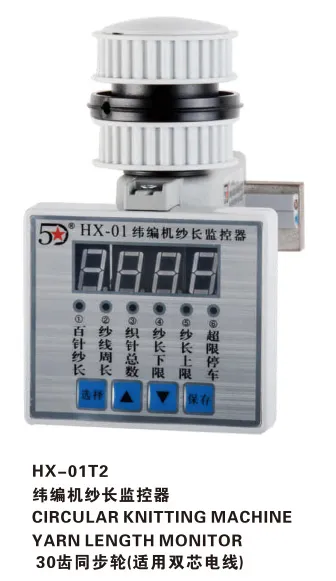
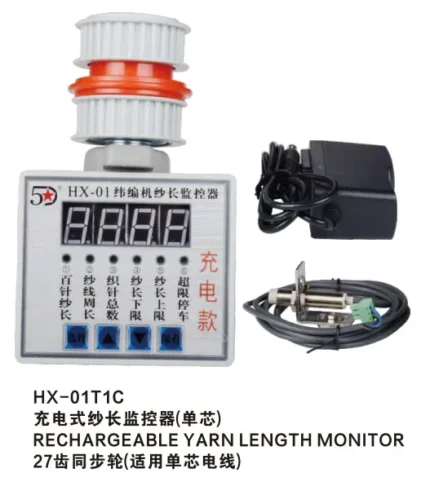
- Computerized monitoring systems
These technologies improve efficiency, reduce waste, and maintain consistent fabric quality. Digital control panels allow operators to monitor speed, yarn consumption, and machine status in real time.
Applications of Circular Knitting Machines
Circular knitting machines are used across a wide range of industries:
Apparel
- T-shirts and polo shirts
- Sweaters and hoodies
- Socks and hosiery
- Sportswear and leggings

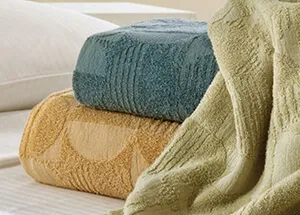
Home Textiles
- Blankets and throws
- Curtains and upholstery fabrics
- Towels and bathrobes
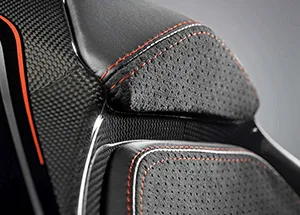
Technical Textiles
- Medical fabrics
- Automotive textiles
- Industrial and functional knit fabrics
Advantages of Circular Knitting Machines
- High production efficiency
- Seamless fabric construction
- Reduced labor costs
- Consistent fabric quality
- Suitable for mass production
These advantages make circular knitting machines a preferred choice for textile manufacturers worldwide.
Final Thoughts
Circular knitting machines have revolutionized the textile industry by combining speed, precision, and versatility. Whether used in small workshops or large industrial factories, they enable manufacturers to meet growing market demands efficiently.
If you are planning to invest in a circular knitting machine, understanding its types, components, and applications will help you choose the right solution for your production needs.
Our Product Range
- Single Knit Series: Single Jersey, Single Terry, Open Width, Three-Thread Fleece
- Double Knit Series: Rib, Interlock, Open Width
- Computerized Series: Single Jacquard, Double Jacquard, Auto-Striper
📩 Contact us to learn more about professional circular knitting solutions.